
PreFabriSight+
Production insight without factory-scale complexity
Testing affordable visual inspection and process intelligence for smaller precast manufacturers.

A clearer production picture for smaller manufacturers
PreFabriSight+ is a six-month feasibility project exploring an affordable digital optimisation approach for UK modular and precast manufacturers. The study combines visual inspection, process modelling and practical decision support without assuming a fully automated factory.The focus is not replacing operators. It is giving authorised staff clearer evidence about defects, material use, energy-intensive steps and production bottlenecks.
Project overview
Lead: Bellacet Ltd
Duration: 6 months
Type: Feasibility study
Sector: SME precast manufacturing
Location: United Kingdom
Funded by Innovate UK

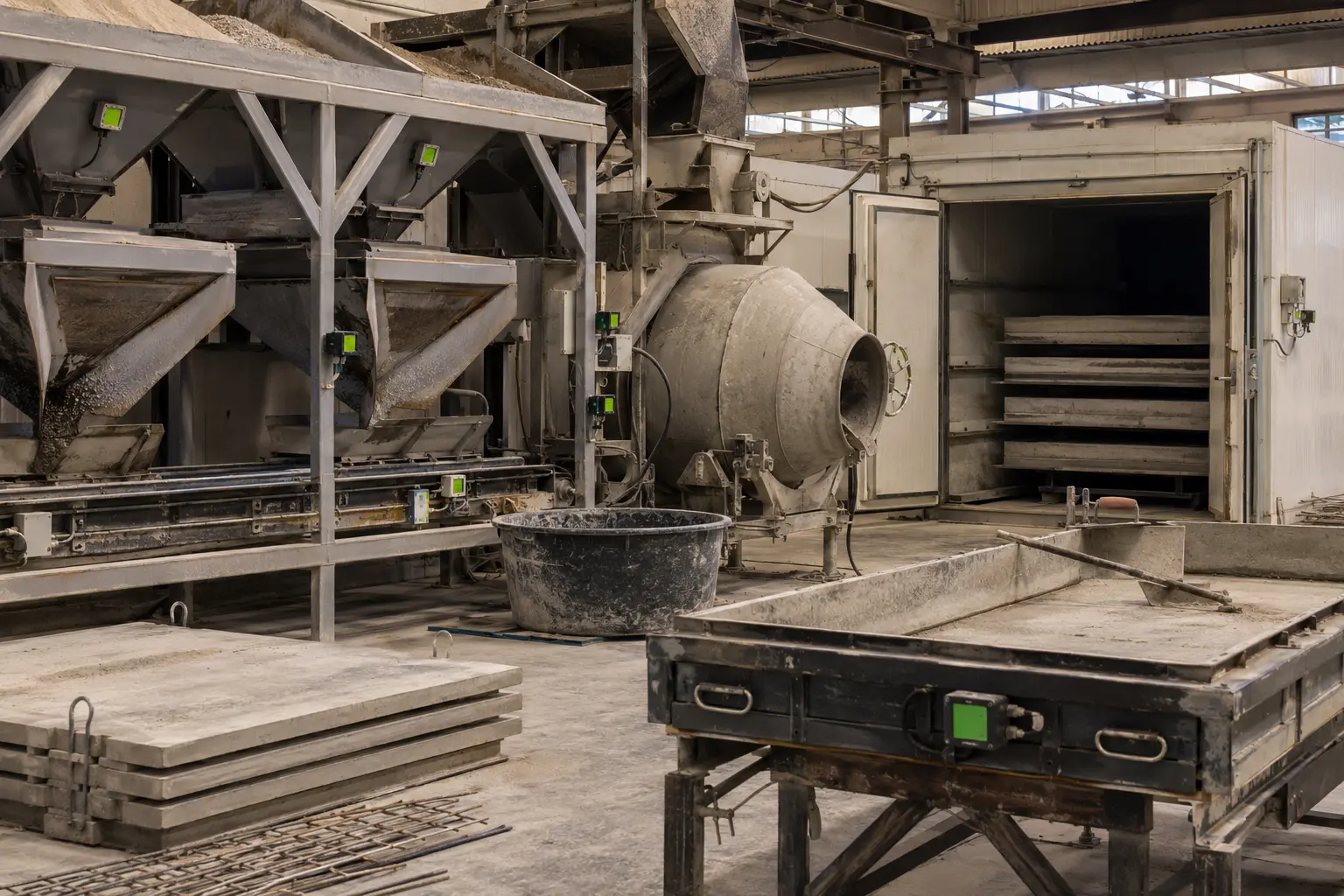
Why current systems miss the SME reality
Many smaller manufacturers operate short-run, variable production with manual batching, visual inspection and legacy machinery. Waste can arise through cement overuse, inconsistent mixes, avoidable rework, curing schedules and limited coordination between production steps.Enterprise manufacturing systems often assume high-volume automation, specialist integration teams and substantial capital investment. PreFabriSight+ examines a lighter modular route that can work with representative data and existing factory processes.
How the technical approach fits together
Computer vision: assess compact edge cameras for surface defects, anomalies and visible waste.Process modelling: map material and energy flows across batching, mould preparation, curing and machine use.AI-assisted analysis: explore production sequencing and resource-allocation options while keeping decisions with authorised staff.Operator interface: present useful alerts, comparisons and insufficient-evidence states through a simple dashboard.
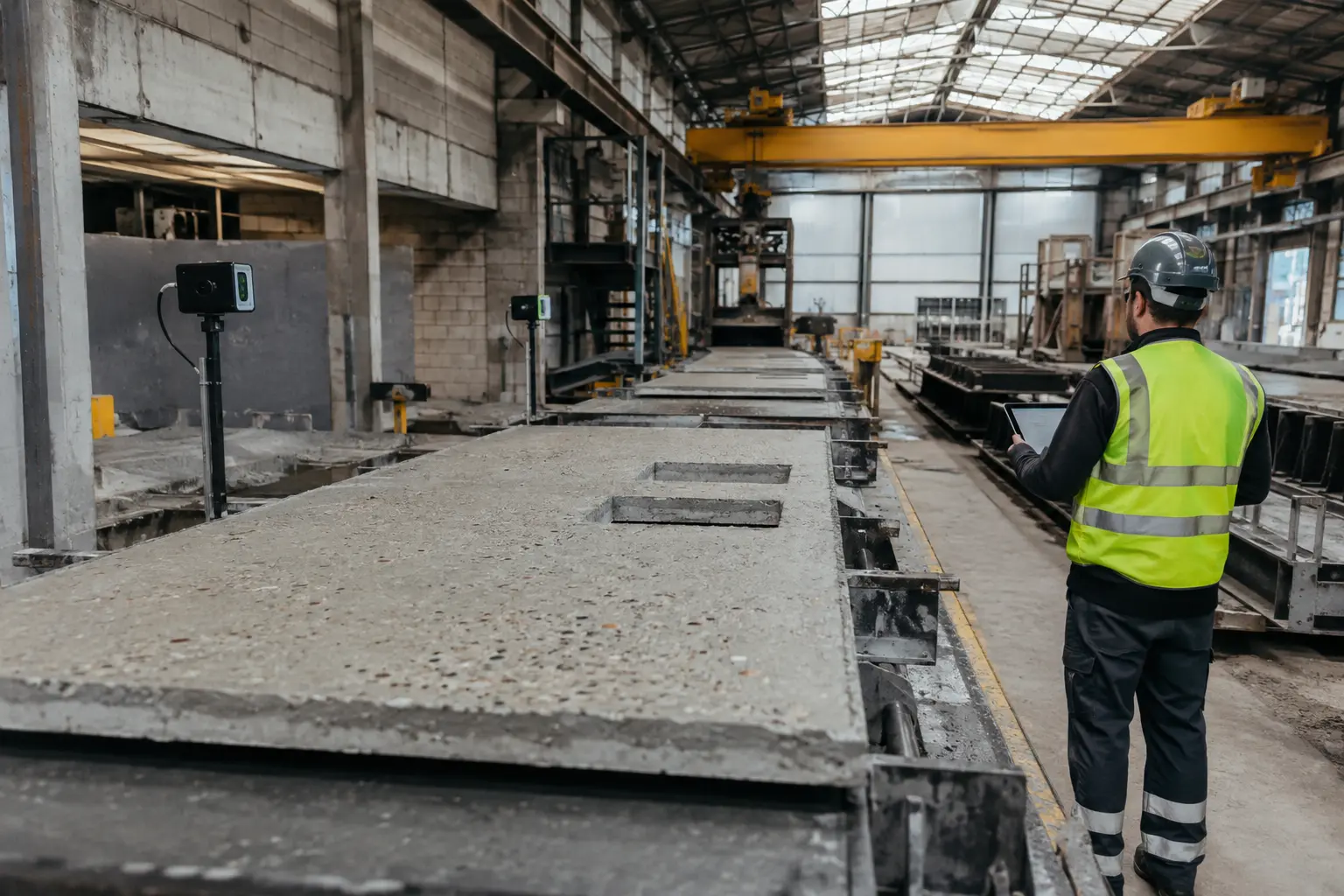
What the feasibility study will test
Data readiness
Whether available production records, images and sensor readings are consistent enough to support useful analysis.
Technical usefulness
Whether lightweight methods can identify defects and resource patterns without enterprise-scale computing.
Operational fit
Whether outputs are understandable, timely and practical for staff working with existing factory processes.

From feasibility to application
The study combines representative process data with direct engagement from a UK precast manufacturer to shape requirements, challenge assumptions and ensure the concept reflects real production conditions.Early proof-of-concept components and an operator-focused dashboard will show how production insight can support day-to-day decisions. The work will also define the technical and commercial pathway toward a larger demonstrator.Potential reductions in material waste and energy demand will be assessed as project hypotheses, creating a credible evidence base for the next stage of development.