
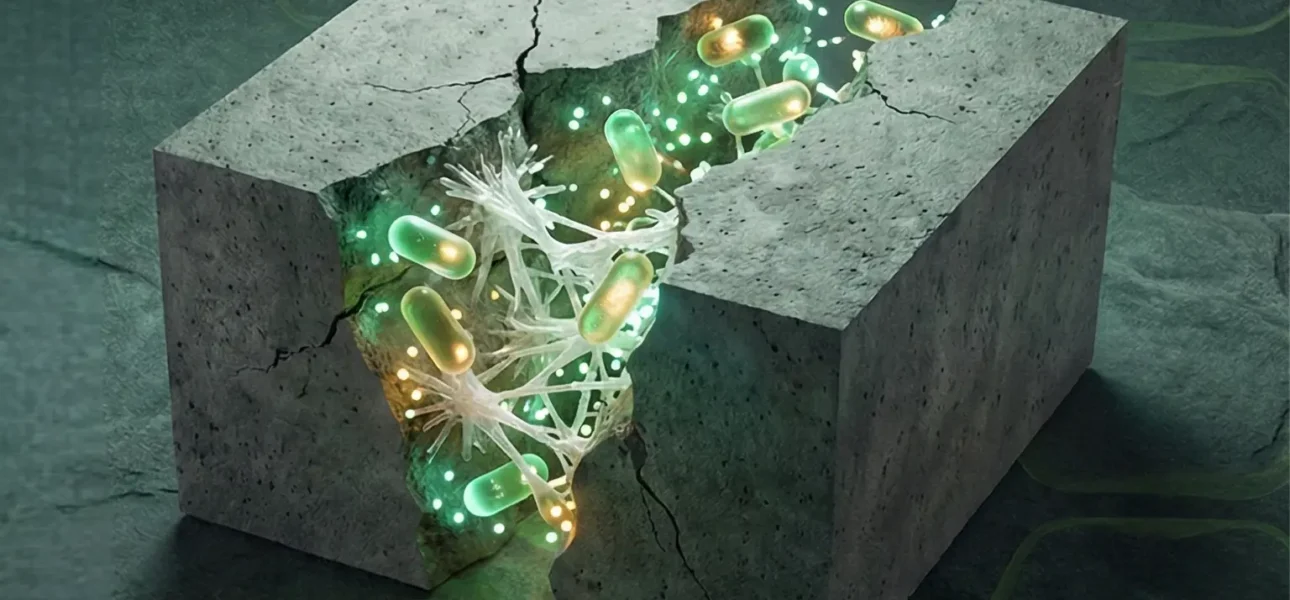
Living and biologically enabled materials could offer new ways to improve durability, reduce waste and respond to changing conditions. In construction, one widely discussed possibility is a material that supports crack repair through a controlled biological mechanism. The scientific idea is compelling, but responsible infrastructure use requires much more than demonstrating an effect in a laboratory sample.
Start with the operating problem
A credible project begins by defining where conventional materials or maintenance approaches underperform. The relevant question may concern small crack development, difficult inspection, repeated repair, embodied carbon or service disruption. The biological mechanism must then be assessed against that specific context.
Evidence beyond the mechanism
Performance evidence needs to consider strength, durability, moisture, temperature, chemical exposure, repeatability and compatibility with manufacturing and construction processes. It must also distinguish between the conditions used in an experiment and those expected across a real asset life.
Safety and containment are equally important. Biological activity, storage stability, handling, activation and end-of-life implications should be examined before the concept progresses towards field use.
Designing for delivery
Even a technically promising material can fail to progress if it cannot be produced consistently, specified clearly or integrated into established workflows. Manufacturers, designers, contractors, asset owners and regulators each need usable evidence and defined responsibilities.
Bellacet’s LivingStone work is framed around these connected questions. The objective is responsible progression: identify the strongest application, test the assumptions that matter and establish what further development would be needed before practical demonstration.